What is a skills wallet?
You may run a CNC lathe, diagnose a control panel, or supervise a warehouse shift. Yet if your résumé says “no degree,” an employer’s screening system might reject it within seconds. A skill wallet closes the gap between your actual abilities and what appears on paper.
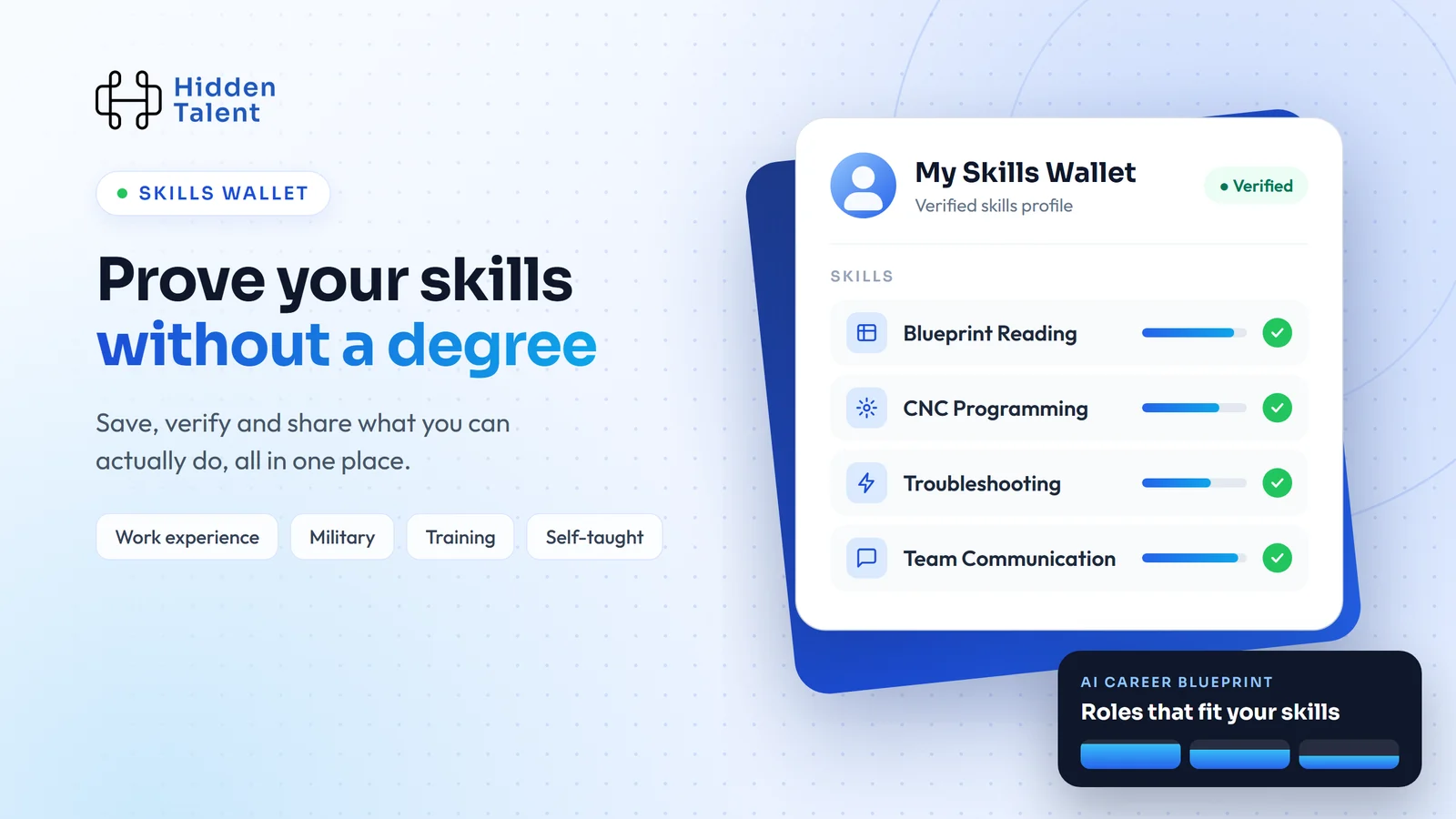
A skill wallet is a free digital skills profile that records and verifies what you can do. It brings together skills gained through work, training, military service, and daily life, giving employers and career coaches a clearer view of your abilities than job titles or degrees alone.
Think of it as a wallet for your skills rather than your cards: add each skill once, update your skills profile as needed, then share it when applying for a job or training program.
On HiddenTalent, building a Skills Wallet costs nothing and takes about 12 minutes. Once it’s ready, the AI Career Blueprint shows which roles match your skills, what you still need to learn, and which jobs you can apply for today.
What belongs in a skills wallet?
A strong skills wallet gathers evidence of what you can do:
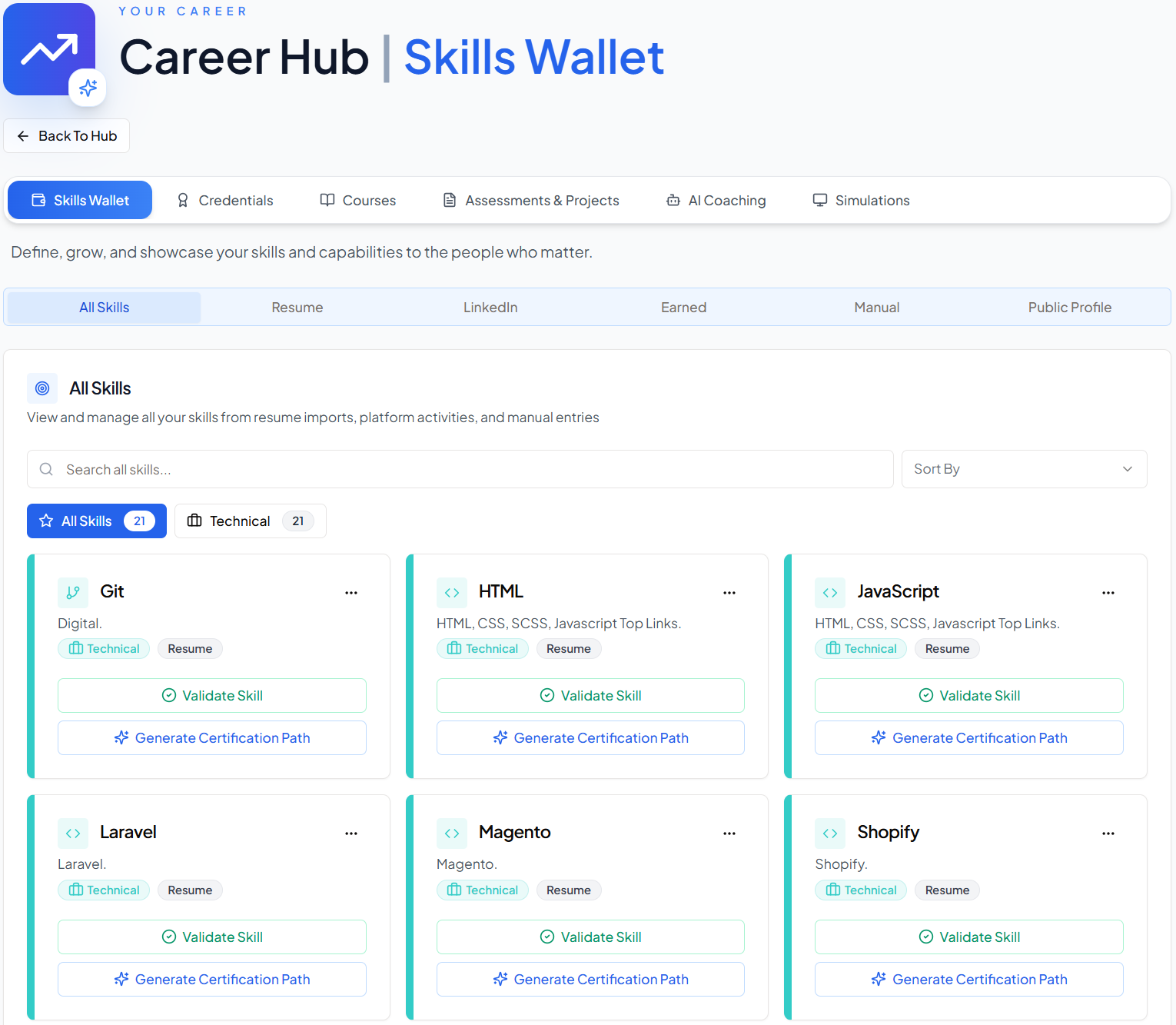
- Technical skills might include blueprint reading, CNC programming, welding safety or electrical troubleshooting; the Skills Library has examples to browse.
- Transferable strengths cover communication, problem-solving, team leadership and customer service.
- Add credentials and training, such as certificates, licenses, apprenticeships and short courses.
- It can also record experience that rarely fits neatly on a resume: military service, volunteering, caregiving, side jobs or skills learned on your own.
- Proof means assessment results, work samples, and verification that confirm a skill rather than merely claiming it.
Skills profile vs. resume
A resume traces your work history; a skill wallet—your skills profile—gives employers evidence of what you can do now.
| Comparison | Resume | Skills profile |
|---|---|---|
| Focus | A resume lists job titles, employers, dates, and degrees. | A skills wallet centers on skills you can prove. |
| Format | You rewrite the same static document for each job. | You update one living profile and reuse it. |
| Gaps in work history | Employment gaps stand out and may prompt questions. | They matter less because the profile puts skills first. |
| Learning outside a job | This learning often gets left off. | A skills wallet counts military experience, self-teaching, and volunteer work. |
| Job matching | Applicant tracking systems scan for keywords. | Matching centers on the skills each role requires. |
| Next steps | A resume offers none. | A skills wallet points out the gaps to close for your target role. |
Many applications still ask for a resume. A skills wallet can give yours more weight by letting you add verified skills directly.
Why skills wallets matter now
More employers now judge applicants by demonstrated ability instead of relying on degrees alone. Our guide explains how this shift toward skills-based hiring works. For job seekers, a clear, verified record of their skills increasingly matters just as much as their work history.
Who benefits from a skills wallet?
It can help job seekers who lack a degree but have practical experience, as well as career changers who need to connect what they already know to a different field.
Veterans can use one to translate military experience into civilian job skills. Students and recent graduates can document their abilities before they have much work history.
Case managers and workforce boards can also use skills wallets to prepare clients for work and track their progress.
Building your skills wallet takes 4 steps
- Start with a full inventory of what you can do—not just your job titles. Include the tools, machines, software, certifications, and tasks you know well, along with abilities gained through military service, volunteering, or hobbies.
- Back up those skills where you can. Take brief assessments, add relevant credentials, or show samples of your work. Employers generally trust verified evidence more than untested claims.
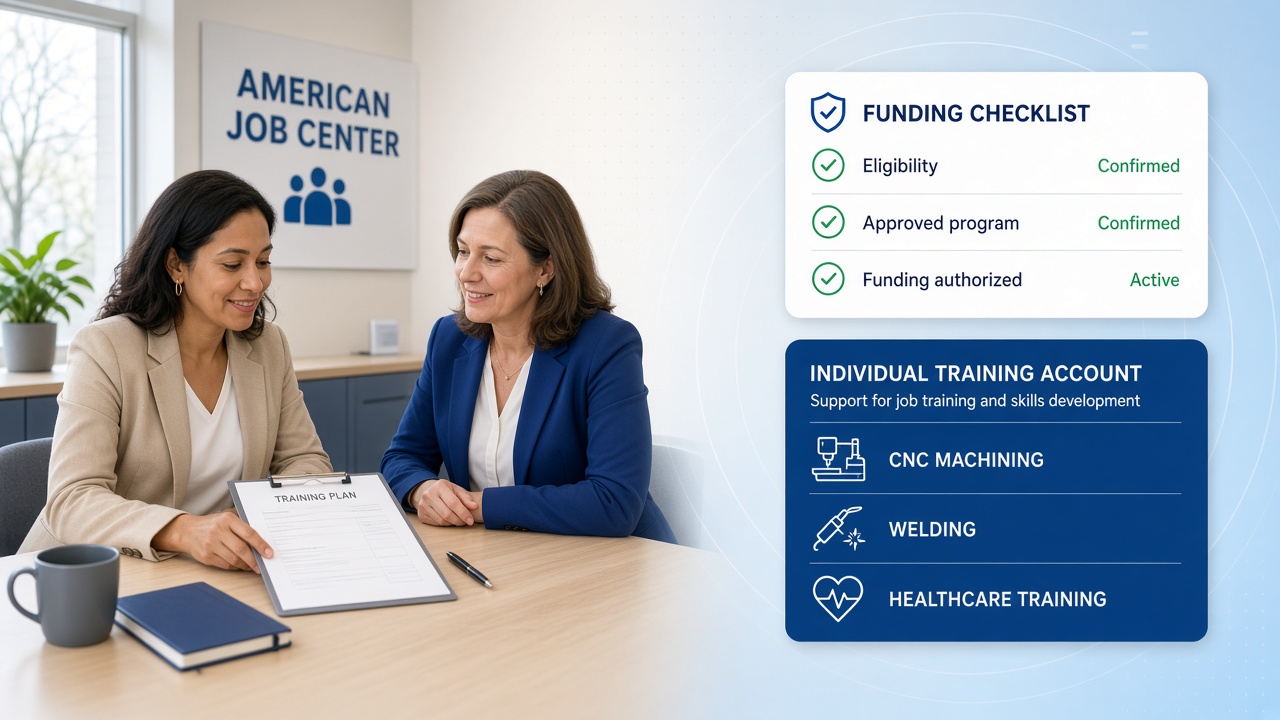
- Then choose a target role and compare its requirements with your current abilities. You may find only a few gaps rather than a need for another degree. Look into suitable training and see whether you qualify for funding to cover it.
- Get matched, then apply. HiddenTalent connects your skills with suitable roles, so you can find relevant jobs without guessing from titles.
Create your free Skills Wallet
In about 12 minutes, HiddenTalent guides you through all four steps. You’ll receive an AI Career Blueprint with matched roles, identified skill gaps, and clear next steps.